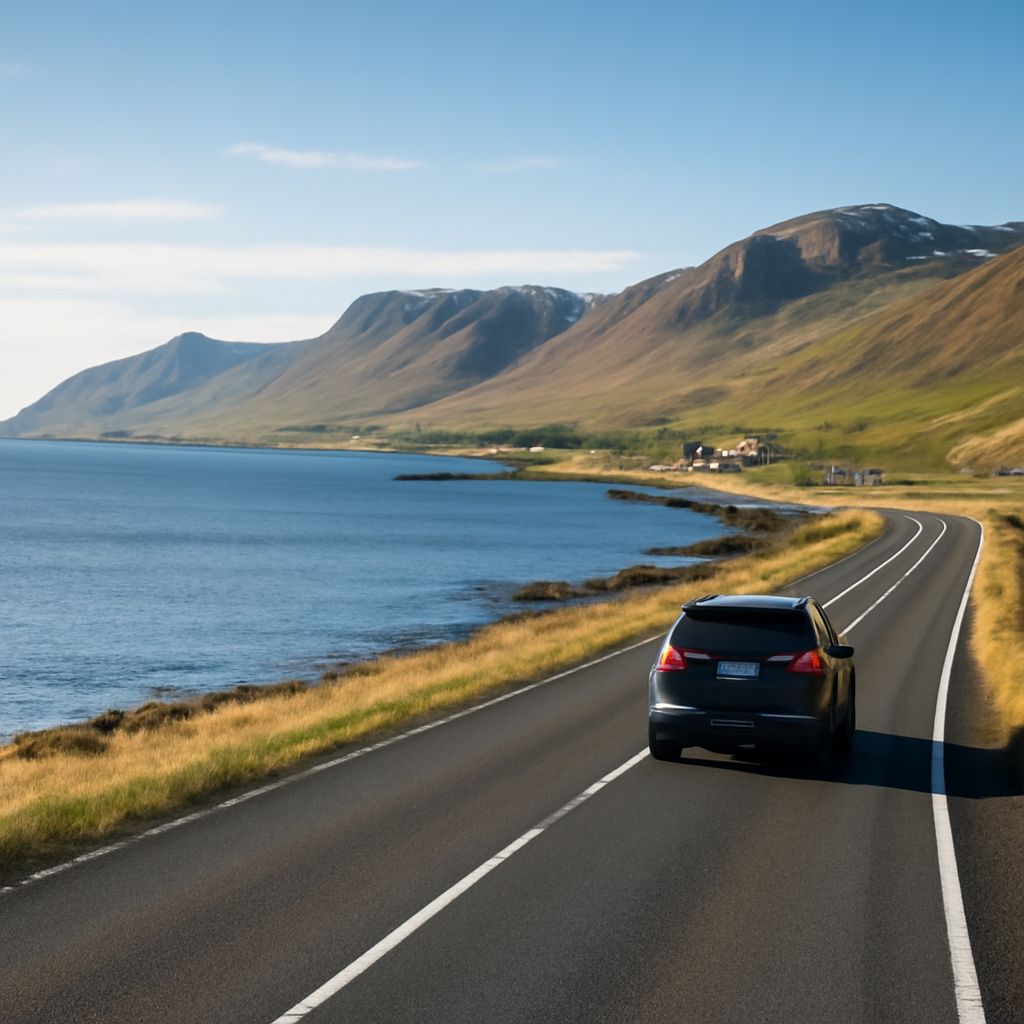
Few drives in the world rival an iceland road trip for sheer visual drama. In the span of a single day, you can pass a glacier, a black sand beach, a geothermal valley, and a waterfall visible from the road. Unlike a route 66 road trip itinerary built around culture and history, an iceland road trip itinerary is structured around natural phenomena — waterfalls, geysers, and volcanic formations that appear on no fixed schedule. A road trip iceland route along the Ring Road (Route 1) circles the entire island in 7–10 days, making it one of the most complete self-drive experiences on earth. If your interest leans toward dramatic coastal and old-growth forest scenery, a pacific northwest road trip itinerary shares some structural similarities — long drives between landmark stops with minimal urban congestion — but Iceland’s scale and density of natural wonders remains in its own category.
Here is how to plan your trip, what to prioritize, and what to budget for a successful Ring Road experience.
Planning Your Iceland Road Trip Itinerary
Start planning at least three months out for summer travel (June–August) and four to six months out for the Northern Lights season (October–March). Summer offers 22+ hours of daylight — an advantage for photography and maximizing driving distance. Winter access to some mountain roads closes due to snow, so check road.is daily during a winter iceland road trip.
A standard iceland road trip itinerary divides into five geographic zones: the Golden Circle, the South Coast, the East Fjords, the North, and the Westfjords. Most first-time visitors stick to the South Coast and Golden Circle, which contain the majority of Iceland’s iconic attractions within 250 kilometers of Reykjavik. Rent a 4WD vehicle even if you plan to stay on paved roads — the ground clearance and all-wheel traction matter on F-roads and river crossings if you choose to venture inland.
Day-by-Day Driving Guide
Days 1–2 cover the Golden Circle: Thingvellir National Park, the Geysir geothermal field, and Gullfoss waterfall. Days 3–5 follow the South Coast east toward Jokulsarlon glacier lagoon, passing Seljalandsfoss, Skogafoss, and Reynisfjara black sand beach along the way. Days 6–8 traverse the East Fjords and north to Lake Myvatn. Days 9–10 close the loop through Akureyri and back to Reykjavik along the northwest coast.
Plan no more than 300 kilometers of driving on any given day — Iceland’s roads are slower than their mileage suggests, and stopping constantly for photos adds 30–60 minutes per 100 kilometers.
Budget and Logistics for a Road Trip Iceland
Iceland is expensive. A realistic daily budget for two sharing a rental car covers accommodation ($120–$200 per night for guesthouses), fuel ($60–$80), food ($80–$120 cooking some meals), and attraction entry fees ($20–$50). The full loop costs $2,500–$4,000 per couple for 10 days excluding flights.
A road trip iceland experience rewards travelers who book accommodation six to eight months in advance — popular guesthouses along the Ring Road sell out quickly, particularly from June through August. Booking.com and direct accommodation websites both work; direct booking sometimes offers the best rates on small family-run properties in the East Fjords that don’t want to pay platform commissions.
Compared to a structured route 66 road trip itinerary or pacific northwest road trip itinerary in the continental U.S., Iceland requires less advance planning for the driving itself — Route 1 is impossible to miss — but more advance planning for lodging because the island’s population is small and accommodation capacity is genuinely limited outside Reykjavik.