Boudoir Photo Ideas: How to Plan a Shoot That Actually Works
The best boudoir photo ideas start before you pick up a camera. They begin with a conversation about comfort, style, and what the final images are for. Whether you’re a photographer building a specialty or a client planning a session, the preparation phase determines how good the results will be.
Alongside boudoir photo shoot ideas for posing and lighting, you also need smart photo hanging ideas for displaying the finished work, photo story ideas for turning individual shots into a cohesive narrative, and practical boudoir photo shoot tips to keep the session running smoothly from start to finish.
Planning Your Boudoir Session
Choosing a Style and Setting
Boudoir photo ideas break into roughly three settings: bedroom, studio, and outdoor. Bedroom sessions feel personal and intimate. Studio sessions offer controlled lighting and a neutral backdrop that lets wardrobe and expression carry the image. Outdoor sessions, done at golden hour with natural cover, produce a different tone entirely.
Talk with your subject about which setting matches the mood they want. Some clients have very clear boudoir photo shoot ideas in mind. Others arrive with no reference images at all and benefit from a mood board prepared in advance showing lighting styles, color palettes, and posing approaches.
Wardrobe and Prop Preparation
Ask clients to bring two to three wardrobe options. Classic choices include lingerie, an oversized button-down shirt, a partner’s sports jersey, or a silk robe. Having options on set lets you adapt when one look doesn’t translate as expected on camera.
Props can create photo story ideas across a series. A client reading a book, writing in a journal, or holding flowers creates a visual thread that links individual frames into a sequence rather than a collection of unrelated shots.
On-Set Boudoir Photo Shoot Tips
The most consistent boudoir photo shoot tips from working photographers center on direction and reassurance. Most subjects are nervous. Start with easy, fully clothed poses to build comfort before moving into the session proper. The camera should be part of a natural conversation, not a barrier.
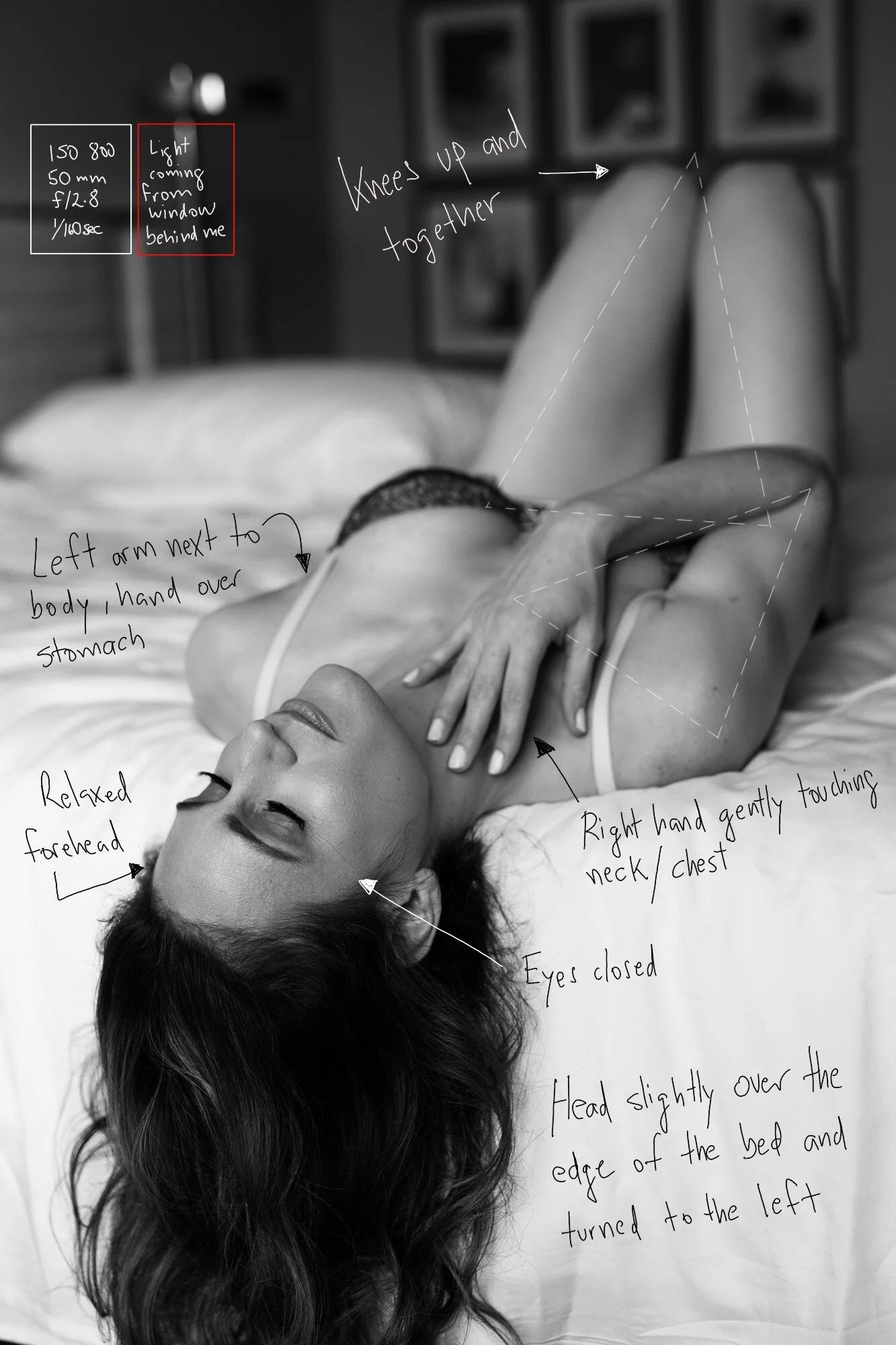
Use a 50mm to 85mm lens at f/1.8 to f/2.8 to compress the background softly while keeping the subject sharp. Window light from a north-facing window in the late morning gives you even, flattering illumination without harsh shadows. If you’re using artificial light, a large octabox set at roughly 45 degrees mimics window light well.
Photo Hanging Ideas for Displaying Boudoir Work
When the shoot is done, photo hanging ideas become relevant for both clients and photographers. For client gifts, a flush-mount album or a box of loose prints in a keepsake box are popular. For studio walls where photographers display sample work, large acrylic prints at 16×20 or 20×30 show the tonal depth of boudoir images better than canvas.
Gallery walls with multiple boudoir frames require careful curation. A series of three to five images that follow a consistent color tone and mood works better than a mix of different sessions or styles. Use identical frames in a consistent color, matte black or warm wood, to let the images carry the visual weight.