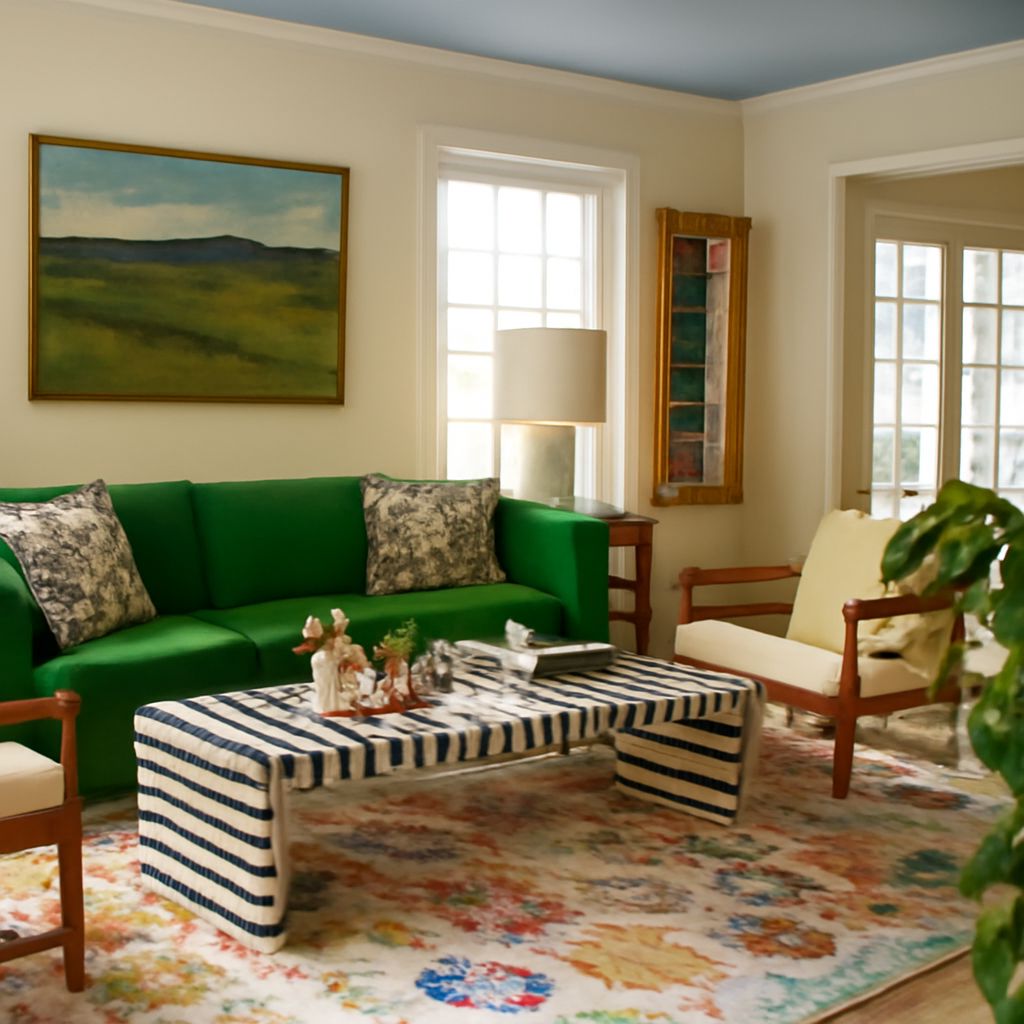
The right amount of color depends on the room’s light and its purpose. A sunny living room can support a deep wall color, while a dim reading corner may need a lighter backdrop and a well-placed lamp. Bright decor at home feels most comfortable when those conditions guide the choice of shade and surface.
A playful approach to home decorating can also begin with a single unexpected object: a sculptural chair, a patterned shade, or a piece of art with an unusual shape. The aim is to give that object a setting in which it can be enjoyed without making the room difficult to use.
Build a Palette Around What Is Already There
Start with the features that will remain: flooring, a sofa, kitchen cabinets, or a favorite photograph. Note their colors in the room’s actual light. A wood floor may appear golden next to a cool gray wall; a blue sofa may read greener beside a yellow rug. These relationships provide a more reliable guide than choosing paint from a small chip in isolation.
Select a main color for the largest surfaces, a second color to support it, and one or two accents. The main color might be a warm off-white rather than a saturated hue. A deep teal sofa and a small amount of orange in a cushion or artwork can then give the room energy. The proportions are flexible: a bolder scheme could use teal on the walls and reserve the light shade for curtains and trim.
Colorful home decor becomes easier to manage when the chosen shades appear in different materials. A red ceramic bowl, a woven rug with a red thread, and a print with a related tone can connect separate parts of a room without making everything match. Leave some breathing room around those accents so each one remains distinct.
Funky Home Decor: Give an Unusual Piece Space
Choose an object for a reason: its shape is striking, its pattern adds movement, or it carries a personal association. A wavy mirror over a simple console can become a focal point, the feature that first draws the eye. A vintage-looking chair in an unexpected color can do the same beside a restrained sofa.
Funky home decor has more impact when its setting gives the eye a clear place to rest. If a patterned cabinet is the focal point, a plain wall behind it lets the silhouette and pattern stand out. A second distinctive object can sit across the room, but it helps to connect the two through a shared color, material, or shape.
Scale matters as much as novelty. Measure the available width and height before selecting a large mirror, pendant, or piece of art. Mark the outline with painter’s tape or cut a paper template to see how it relates to doors and furniture. A small object may be better grouped with books or plants; a large one may need a wall of its own.
Repeat Color Without Repeating Everything
A colorful approach to home interiors can hold together even when the furnishings come from different periods. Repetition creates a visual path: a green cushion can pick up a green shape in a print, while a small green vase carries the color to another surface. These colorful home furnishings can vary in lightness and intensity, provided their shades still look related in the room.
Pattern adds another layer. Begin with a fabric or rug that includes two or three of the chosen colors, then pair it with simpler surfaces. If two patterns share a space, vary their scale: a large floral motif can sit beside a small stripe. Look at them from the doorway as well as up close. From a distance, a dense pattern may read almost as a single color.
For lively home decorating with a retro feel, a curved lamp and a geometric cushion might be enough to establish the mood. Mixing a smooth surface with woven or textured material gives the scheme depth and makes repeated colors less uniform. Practical textiles should also suit the way the room is used; a washable cover may be valuable on a frequently used sofa.
Let Light Change the Final Choice
Test samples where they will live. Paint a large removable board or use a manufacturer’s sample, then move it between walls. Examine it in daylight, after sunset, and with the lamps normally used in the room. Shadows can deepen a color, and a warm bulb can make a pale surface appear more yellow.
Lighting serves the scheme and the people using it. A ceiling fixture can provide general light, while a floor or table lamp puts light near a chair or desk. Check where the switch and outlet are, how the cord will run, and whether the shade directs light toward the task. A beautiful lamp that leaves a reading chair in shadow needs a different position or a companion light.
A glossy finish reflects more of the surrounding light than a matte one. Use that difference deliberately: a glossy ceramic object can add a bright highlight, while a matte wall can provide a quieter field behind it. In a room with little daylight, introduce contrast through a lit artwork or a textile as well as through wall color.
Keep the Room Easy to Live In
A memorable room still needs clear routes and usable surfaces. Leave enough space to open drawers and doors, move around the furniture, and set a cup beside a chair. Before adding a floor sculpture or oversized planter, walk the route through the room with the proposed footprint marked out.
Quirky home decor can be practical, too: an unusually shaped tray can collect keys, and a patterned basket can hold throws. Give everyday objects a place before filling shelves with ornaments. In homes with children or pets, consider an item’s stability and whether fragile pieces belong on a higher, secure surface.
A colorful interior for the home is easier to refine in stages. Place the largest piece first, live with it, and add smaller accents where the room needs another point of interest. Photograph the space from its entrance; the image can reveal a crowded corner or an empty area that is less obvious while standing in the middle of the room.
Choose one room now, place a favorite object or fabric in it, and select three colors from it to test against the existing furniture in daylight and lamplight.