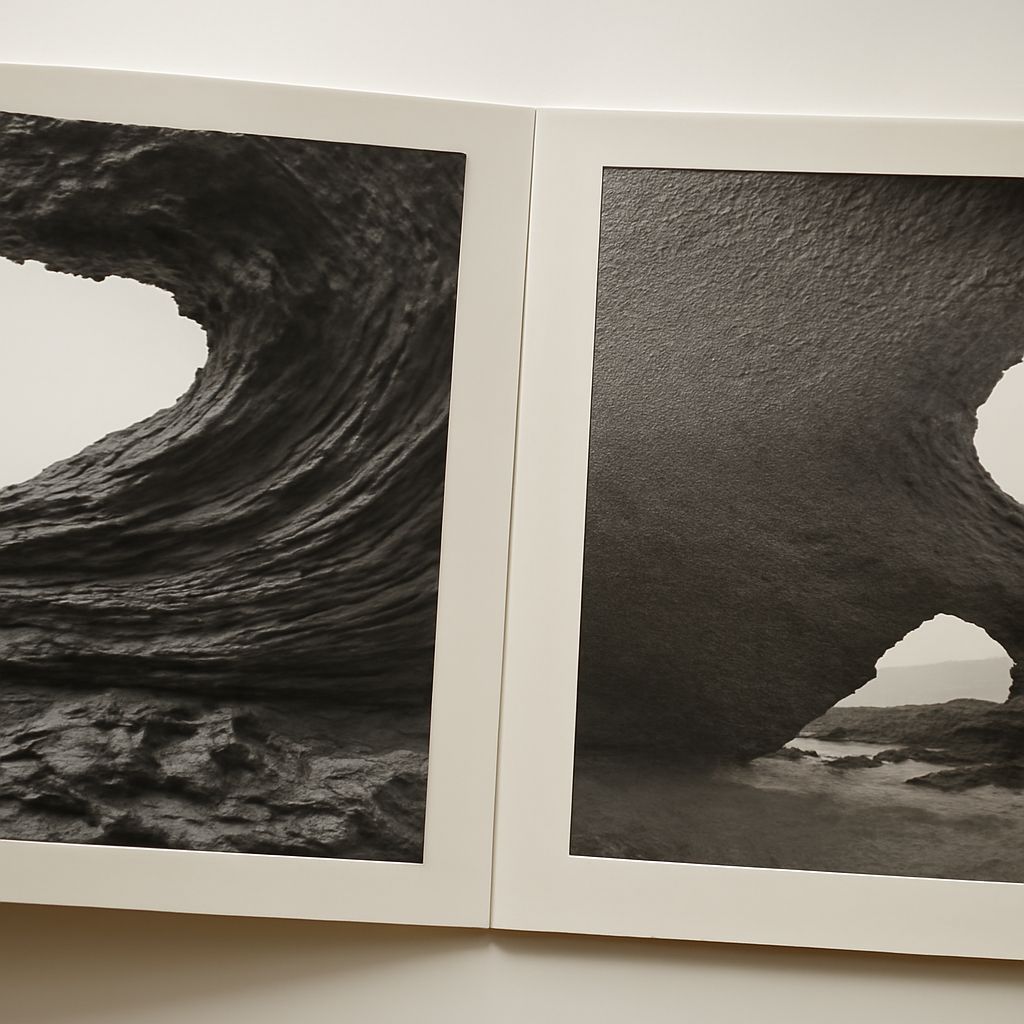
Choosing the right print media starts with understanding what you are actually printing and where it will live. Matt photo paper is the first choice for any black and white print that will be viewed under gallery lighting or handled frequently — its non-reflective surface eliminates the glare that makes glossy prints difficult to read under overhead fixtures. Black and white paper in the photographic sense refers to any media optimized for monochrome output, whether inkjet or darkroom-based. Cardstock photo paper bridges the gap between fine art print media and functional print applications — greeting cards, postcards, event programs — where the image needs to hold up to handling without lamination. Black and white photo paper for inkjet output comes in both baryta (silver-halide-style coating) and standard matte finishes, each producing a distinctly different tonal quality. And at the casual end of the spectrum, black and white paper plates demonstrate that the monochrome aesthetic has moved fully into party and event décor — the same visual logic that makes a gallery print compelling applies to tableware at a formal event.
Matt Photo Paper vs Baryta: Understanding the Difference
Matt photo paper has a non-reflective coating that absorbs rather than reflects light. This produces prints with a soft, tactile surface — the kind that looks correct in a frame under gallery track lighting and does not produce hotspots or glare when viewed at an angle. The trade-off versus glossy surfaces is a slightly reduced maximum black density (Dmax) — matte surfaces cannot achieve the deep, rich blacks that glossy and semi-gloss papers produce.
Baryta-coated black and white photo paper is the fine art inkjet equivalent of silver gelatin darkroom paper. Baryta adds a thin layer of barium sulfate beneath the inkjet coating, which increases Dmax and produces a semi-gloss surface that mimics the look of fiber-based darkroom prints. For a serious black and white print where shadow depth matters, baryta black and white photo paper from Ilford, Hahnemühle, or Canson outperforms standard matte media significantly.
Cardstock Photo Paper for Functional Applications
Cardstock photo paper in the 80–100 lb cover range is the standard for photo greeting cards, invitations, and event programs. It is thick enough to hold its shape when mailed or handled but thin enough to run through most home and prosumer inkjet printers without jamming. Use cardstock photo paper for any application where the printed item needs to function as a rigid object — a table place card, a photo bookmark, a folded invitation — rather than lie flat in a frame or album sleeve.
Black and White Paper in Event Décor and Photography Printing
The cross-category appeal of black and white paper extends from darkroom printing to party supplies. Black and white paper plates — often featuring geometric or graphic patterns — are a staple of formal event tablescaping that wants visual elegance without color. The same high-contrast monochrome logic that makes a gallery print striking makes a tablesetting with black and white paper plates read as intentional and sophisticated. Pair with black linen napkins and white floral arrangements for a fully cohesive monochrome event aesthetic.
For photographers deciding between print media types: use matt photo paper for portfolio prints and exhibition work where glare is unacceptable; use baryta black and white photo paper for collector-quality fine art editions; use cardstock photo paper for client gifts, greeting cards, and any printed deliverable that needs to function as a sturdy standalone object. Bottom line — the best print starts with the right paper for its context: matt photo paper for walls, baryta for archives, cardstock for hands, and even black and white paper plates when the monochrome aesthetic extends to the table.