Engagement Photos Outfits: How to Dress for Your Perfect Shoot
Choosing your engagement photos outfits is one of the most fun — and most stressful — parts of planning a shoot. The right look flatters both of you, complements the location, and photographs beautifully in any light. Knowing what to wear for engagement photos starts with understanding how color, texture, and fit read on camera versus in person. A few great engagement photo outfit ideas can take you from overwhelmed to confident in under an afternoon of planning. Figuring out what to wear engagement photos style-wise means thinking about coordination without matching too perfectly. And the golden rule for engagement photos what to wear: choose clothes that feel like you on your best day — not a costume.
Your photographer will thank you for thinking ahead. Outfits that move naturally, avoid busy patterns, and suit the shooting location make every frame stronger.
Outfit Coordination: Colors, Patterns, and Texture
Coordinate without being matchy-matchy. Pick a color palette of two or three tones and let each person choose their own interpretation. A navy blazer on one partner pairs beautifully with a dusty blue dress on the other — you look connected without being twins. Earth tones, muted jewel colors, and soft neutrals all photograph well in outdoor settings.
Avoid bold horizontal stripes, large logos, and ultra-busy prints. These patterns create visual noise that draws the eye away from your faces. Texture, on the other hand, adds depth — a cable-knit sweater, lace overlay, or linen fabric all look richer in photographs than a flat cotton tee.
Season and Location Matching
Your engagement photo outfit ideas should match both the season and the setting. A flowing linen dress looks stunning in a golden-hour field but out of place in a city loft during winter. For outdoor fall shoots, layering works naturally — a fitted blazer over a light blouse gives you a polished look that also keeps you warm between shots.
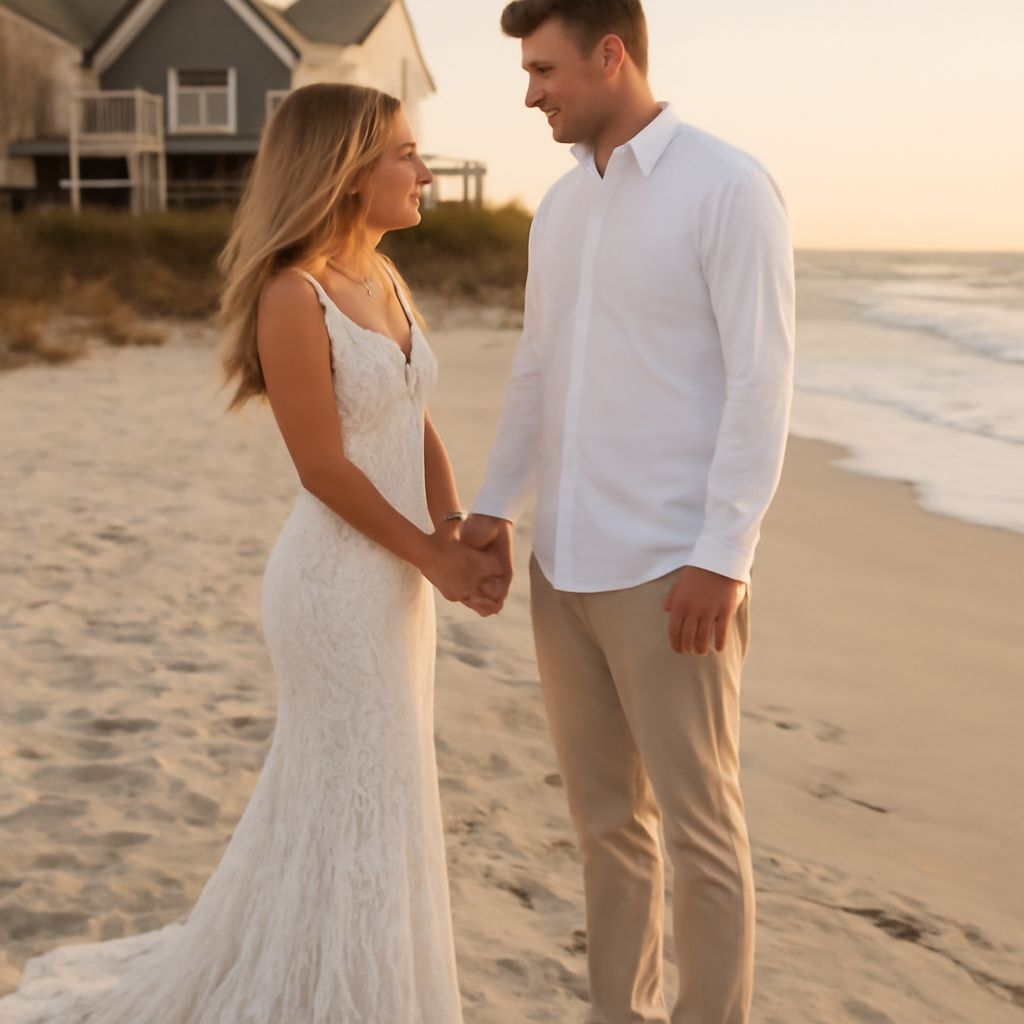
Beach sessions call for light fabrics in whites, creams, and soft blues that catch the breeze. Urban settings suit structured pieces in charcoal, black, or warm burgundy. Coordinate your outfit choices with your photographer at least two weeks before the shoot so there is time to swap a piece if something clashes with the location palette.
Fit and Comfort
Clothes that fit well photograph better than clothes that are too tight or too loose. A blazer with a slight taper at the waist, a dress that skims the body without clinging — these choices translate to a cleaner silhouette on camera. If you need to size up for comfort and then have a piece tailored, that investment (typically $25–$60 for basic alterations) pays off in every shot.
Practical Tips for the Day of the Shoot
Knowing what to wear engagement photos day-of means packing smart. Bring a second outfit if your session is two hours or longer — most photographers love the variety, and the change of clothes gives the gallery a different feel. Plan your outfit changes to move from casual to more formal rather than the reverse; you tend to relax into the shoot as it goes on.
Break in any new shoes before the shoot. Blisters and uncomfortable footwear show on the face, not just the feet. If you are shooting outdoors, bring a lightweight layer you can remove quickly between setups. Your photographer will signal when it is time to add or remove pieces for different looks.
Consider engagement photos outfits from a practical standpoint too: avoid white-on-white pairings where both partners wear white, as this can flatten on camera. One partner in white with one in a coordinating neutral creates more visual interest. Review sample galleries from your photographer to understand what to wear for engagement photos in their specific editing style — a photographer who edits warm will make different colors pop than one who shoots cool and airy.
The best engagement photo outfit ideas are the ones that make you feel like yourselves. Spend some time with your photographer’s portfolio, pull inspiration images, and remember that authenticity always outperforms trends in photographs that you will keep for decades.