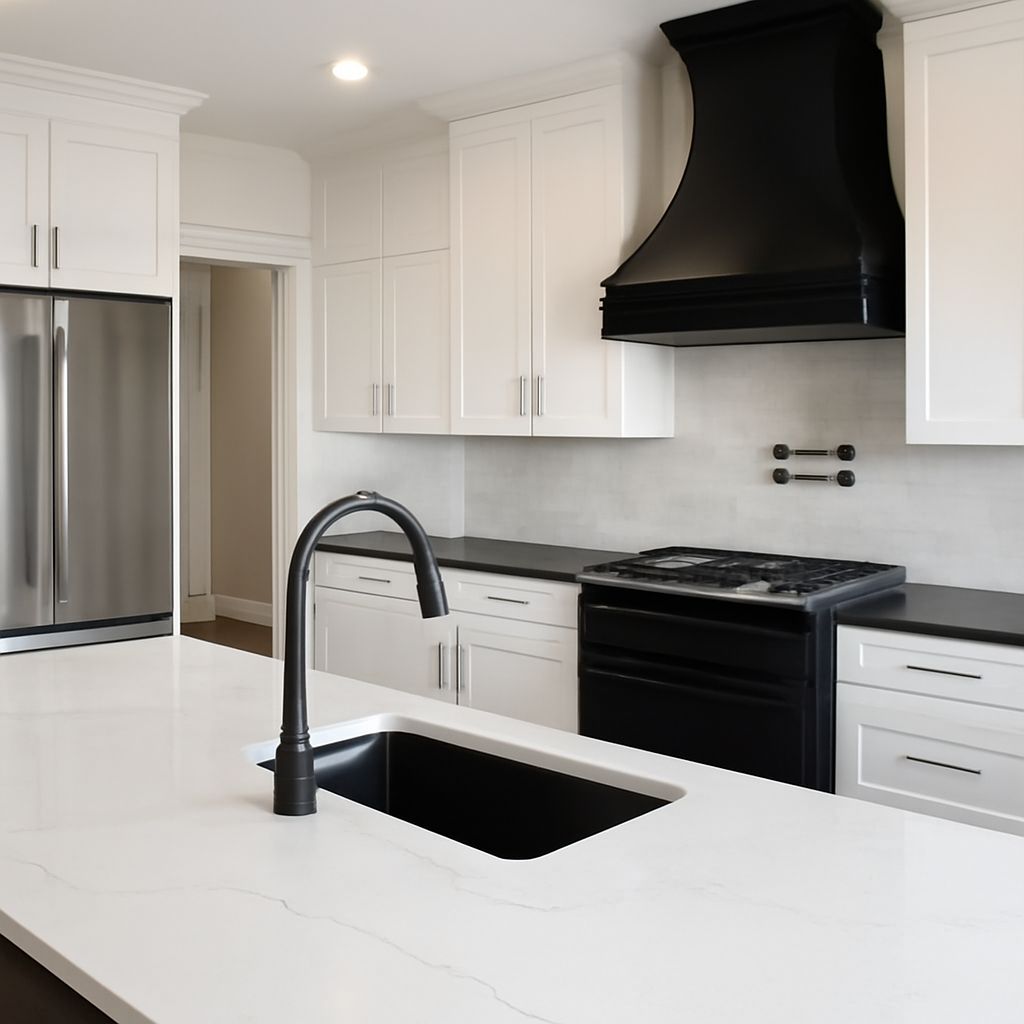
White Cabinets Black Countertops: Design Principles and What to Pair Them With
White cabinets black countertops create one of the sharpest visual contrasts available in kitchen design — and that contrast is the point. When a white kitchen black countertops combination works, it’s because every other element in the room was chosen to either echo or deliberately soften that contrast. When it falls flat, it’s usually because the surrounding elements compete rather than support.
This guide covers how white cabinets with black countertops work across different kitchen styles, what materials perform best as a white cabinets black countertop choice, and how to pair this high-contrast combination with flooring, hardware, and backsplash.
Why White Cabinets Black Countertops Create Such a Strong Look
Black countertops white cabinets work because the human eye is naturally drawn to edges and contrast. In a kitchen, the countertop edge — where the dark horizontal surface meets the white vertical cabinet face — creates a clean, defined line that reads as intentional and architectural. In design terms, this is value contrast working at maximum: the lightest possible surface against the darkest.
White cabinets with black countertops read differently depending on the cabinet finish. Flat-front shaker cabinets with a bright white finish create a modern, graphic look. Raised-panel cabinets with a softer white (cream or linen) feel more traditional. Both work with black countertops, but they produce different room personalities. Decide on the cabinet profile and paint color first — the countertop choice follows from there.
Countertop Materials for White Kitchen Black Countertops
For a white kitchen black countertops combination, the most popular materials are absolute black granite (very dark, slightly textured), black quartz (consistent color, engineered), black soapstone (matte, develops patina over time), and honed nero marquina marble (dramatic white veining on black ground).
Absolute black granite is the most durable and lowest maintenance of these options. It resists scratching and heat, seals easily with an annual application, and costs $60–$120 per square foot installed. Black quartz (from brands like Silestone, Caesarstone, and MSI) has no veining and a consistent appearance — some prefer this for a cleaner white cabinets black countertop look; others find it too uniform.
The white cabinets black countertops combination pairs most effectively with these surrounding elements: light-to-medium grey flooring (hardwood, tile, or LVP), medium-toned brass or matte black hardware, and a white or light grey subway tile backsplash. Avoid very dark flooring — it loses the visual anchor of the countertop in a sea of dark tones and makes the room feel small.