SD Card Holder, CF vs SD Card, SIM vs SD Card and UFS Memory Card Guide
Keeping track of memory cards is a real problem once you have more than a handful. A dedicated sd card holder protects cards from static, physical damage, and loss — especially when you’re switching between multiple camera bodies or formats on a shoot. Beyond storage, the format differences between cards matter: knowing cf card vs sd card performance specs, understanding why is a sim card a memory card question comes up so often, and learning where ufs memory card fits in the speed hierarchy all help you make smarter gear decisions.
The sim vs sd card confusion is among the most common tech questions non-photographers ask. This guide clears that up and covers the full card format landscape from a working photographer’s perspective.
Choosing and Organizing an SD Card Holder
An sd card holder comes in two main forms: hard case and flexible wallet. Hard cases offer better physical protection — polycarbonate shells with rubber gaskets protect against drops and brief water exposure. Flexible wallets hold more cards in a smaller package but offer no drop protection. For travel and field work, a hard-shell sd card holder with individual card slots is the right call. Look for models that hold at least 12 cards, with labeled slots for shot and unshot cards kept on opposite sides.
Color-coded memory card cases go further — some photographers flip cards face-down after shooting to distinguish used from fresh cards without reading labels. This habit takes 30 seconds to build and eliminates the risk of reformatting a card that hasn’t been backed up yet.
Is a SIM Card a Memory Card? Clearing Up the Confusion
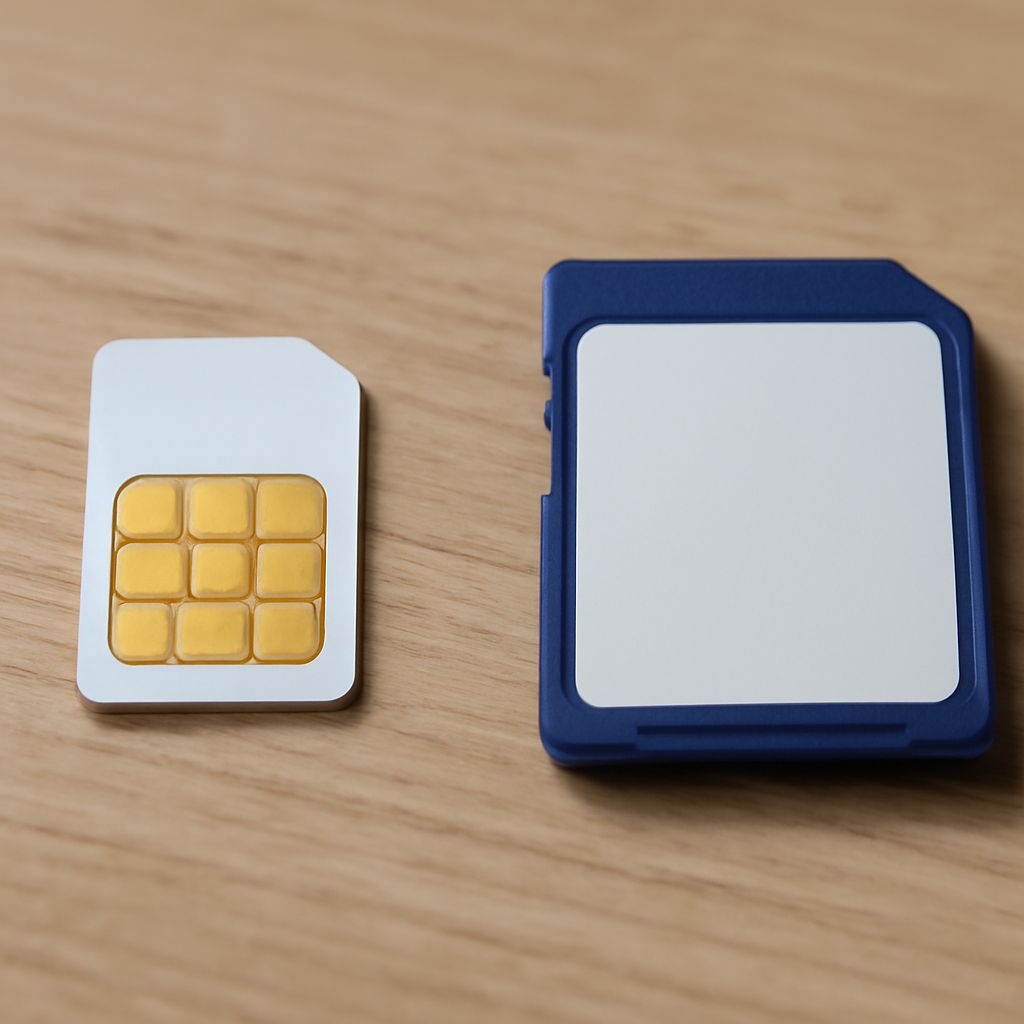
Is a sim card a memory card? Technically no, though both are small chips that fit in slots. A SIM (Subscriber Identity Module) card stores your phone’s identity information — the number, carrier, and authentication data — not user files or photos. It holds a few kilobytes at most. An SD card stores user data: photos, videos, documents, apps. They are different chips with different functions and different physical connectors. Sim vs sd card is not a comparison of competing formats — they serve completely different purposes.
CF Card vs SD Card: Performance and Format Comparison
The cf card vs sd card debate comes down to speed, durability, and camera system compatibility. Compact Flash (CF) cards use a parallel interface that historically delivered faster write speeds than standard SD. A high-end CF card rated at 1066x writes at around 160 MB/s. Modern UHS-II SD cards match or exceed that at 250–300 MB/s. The cf card vs sd card speed gap has effectively closed in current formats.
CFexpress Type B cards — the successor to CF — write at up to 1,700 MB/s, which enables RAW video workflows that no SD format can match. Cameras like the Nikon Z9, Canon EOS R3, and Sony A1 use CFexpress Type B as the primary slot. If your camera uses both formats, put your primary shooting card in the faster slot and use the SD slot for backup overflow.
UFS Memory Card: The Next Storage Standard
A ufs memory card uses the Universal Flash Storage protocol, the same interface type found in high-end smartphone internal storage. Samsung’s UFS card specification reaches sequential read speeds of 1,200 MB/s and write speeds of 900 MB/s — roughly 4x faster than the fastest UHS-II SD card. Currently, ufs memory card adoption is limited to specific Samsung devices and a small number of professional cameras, but the standard is positioned to enter mainstream camera use within the next two to three years.
The speed advantage of a ufs memory card matters most in continuous burst shooting and 8K video recording. A camera that buffers 120 RAW frames needs a card that can drain the buffer in under 10 seconds to be practically usable. UFS achieves that. Current UHS-II SD approaches it.
Bottom line: Start with a quality sd card holder to protect what you have, then match your card format to your camera’s slot specs. The sim vs sd card confusion is simply a naming issue — they do completely different things. Invest in the fastest format your camera supports, and track the ufs memory card standard for your next body upgrade.