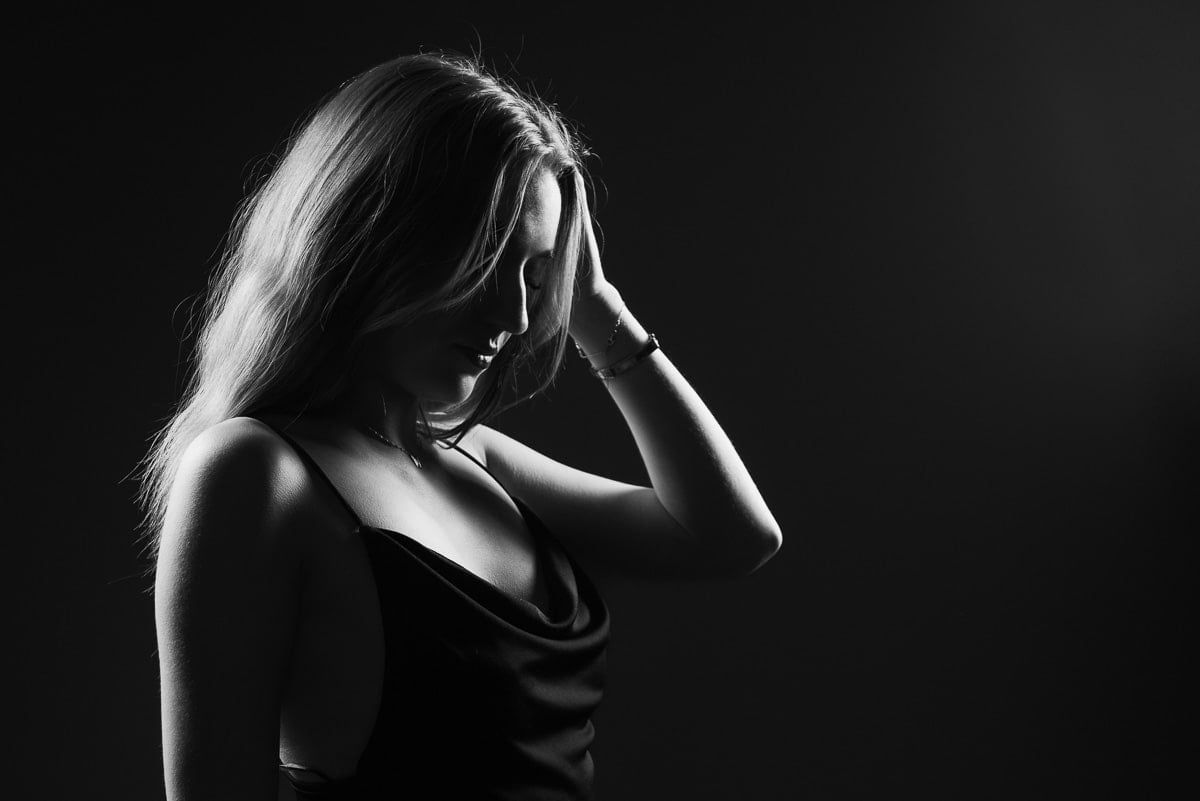
Black and White Portrait Photography: Techniques, Fashion and Digital Tips
Black and white portrait photography strips away color distraction and forces you to focus on what matters most: light, shadow, texture, and the subject’s expression. When you shoot monochrome portraits, every wrinkle, every catch light, every tonal gradient carries more visual weight than it would in color. The result is images that feel timeless rather than tied to a specific era or season.
Whether you’re exploring portrait photography black and white for the first time, studying black and white fashion photography for editorial work, creating a black and white self portrait, or building a body of work in black and white digital photography, the core techniques remain consistent across all of these applications.
Lighting for Black and White Portraits
Black and white portrait photography lives or dies by contrast. Without color to separate subjects from backgrounds, you need tonal contrast to do that work. Hard light — bare flash, direct sun, or a small modifier — creates deep shadows and strong separation. Soft light from a large octabox or a window gives you smoother gradients that reveal skin texture without being harsh.
For portrait photography black and white with a single light, try placing a 24-inch beauty dish at a 45-degree angle and 2 feet above eye level. The catchlight it creates is round and visible in both eyes. Shadow falloff happens quickly — place a reflector at knee height on the shadow side if you want to open up the face, or leave it as is for a more dramatic look.
Contrast and Zone Matching for Tonal Depth
Ansel Adams’ Zone System applies directly to portrait work. Zone V is middle gray — your reference point. Skin tones in diffused light sit around Zone VI. Deep shadows fall to Zone II or III. When you nail exposure so that skin lands at Zone VI, highlights stay well below clipping and shadows retain detail in the darkest visible areas.
Shoot RAW and check your histogram before you leave a setup. A histogram pushed too far right loses highlight detail in hair and skin. A histogram weighted too far left loses shadow detail in clothing and backdrop. Aim for a balanced spread with no clipping at either end.
Black and White Fashion Photography Techniques
Black and white fashion photography demands strong graphic composition. Garment textures — tweed, silk, leather, linen — read completely differently in monochrome than in color. A cream silk blouse and an ivory linen jacket that look nearly identical in color become tonally distinct in black and white when you manage light direction carefully.
For editorial-quality black and white digital photography, shoot tethered and review images at full size on a calibrated monitor. What looks sharp on the camera’s LCD often shows uneven sharpness across a fashion image when viewed full-frame. Focus on the nearest eye for standing shots, the center face for straight-on work.
Creating a Black and White Self Portrait
A black and white self portrait requires a tripod, a remote shutter release, and a pre-focused mark on the floor where you’ll stand. Set your focus point manually to the position mark, switch to manual focus, and lock it before you move behind the camera to use the remote. Live view autofocus drifts between frames when there’s no subject in frame — manual focus holds your plane exactly.
Black and white digital photography workflows in Lightroom give you the most control when you convert using the B&W Mix panel rather than the desaturation slider. Adjust individual color channels to build the contrast you want. Pulling reds darker makes lips and warm skin tones read with more shadow drama. Pulling oranges lighter brightens skin overall without losing definition in contours.
Bottom line: Black and white portrait photography rewards deliberate light placement and careful tonal management. Whether you’re creating a black and white self portrait or shooting black and white fashion photography for a client, the same rules apply: control your contrast, expose for skin, and work the B&W mix channels in post.