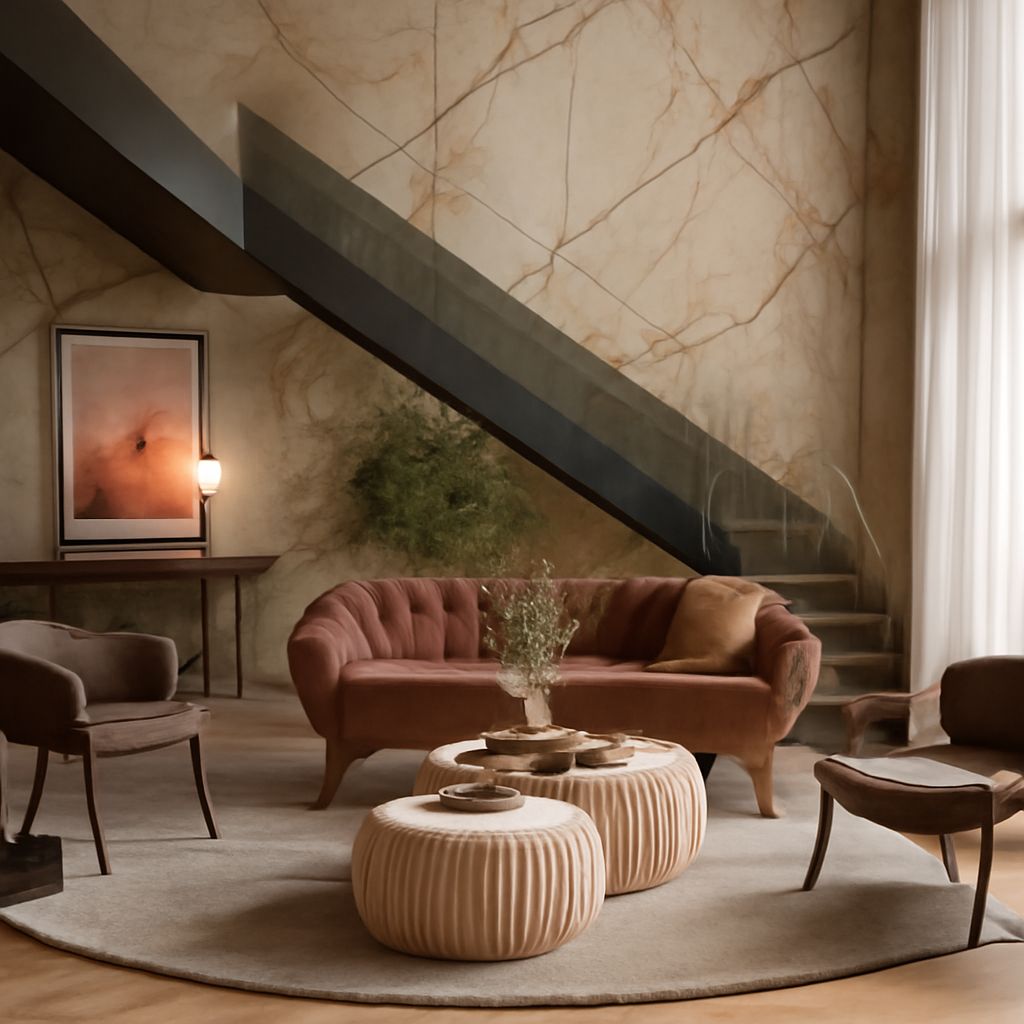
A chair placed beside a window may be beautiful, but it becomes a better reading spot when a lamp, a small table, and a clear path to the seat are considered with it. The design of an interior joins those choices into a room that supports the people using it.
A definition of interior design begins with that relationship between people and space. Layout, light, materials, and color work together: changing one can affect the others. A larger sofa, for example, changes not only the appearance of a living room but also its circulation, or the way people move through it.
Interior design definition: planning for people and place
What is interior design? It is the planning and shaping of interior spaces to support activities, comfort, safety, and appearance. The Council for Interior Design Qualification describes the profession as applying specialized knowledge to environments that support health, safety, and the human experience. Its scope includes space planning, materials, furnishings, lighting, and acoustics.
An interior design definition becomes more useful when connected to a real problem. A room may need to hold a family conversation, provide a place to read, and allow a person to reach the garden without weaving around furniture. Design gives those requirements a physical arrangement. Decorative choices then reinforce that arrangement through color, pattern, objects, and finish.
Interior decoration focuses on the visual and furnishing elements of a space. Interior design can include those choices and, depending on the project and the professional’s qualifications, broader planning and technical work. Work involving walls, electrical systems, or permits may require other qualified professionals and must meet applicable local requirements.
Start with the room’s job
Consider a hypothetical living room used by two adults, a child, and occasional guests. The room needs a comfortable conversation area, a reading chair, storage for games, and an unobstructed route from the entrance to a patio door. The television is used in the evening, while the window provides the strongest daylight during the day.
Before selecting a style, measure the room’s length and width, ceiling height, and the position of windows, doors, outlets, and fixed features. Note the direction doors swing and the height of window sills. Measure the furniture that will remain. A simple scaled sketch can reveal whether a proposed sofa blocks the patio route or leaves enough space for a cabinet to open.
Next, rank the needs. If the room must seat four people every evening, seating capacity comes before an oversized display table. If the patio door is used daily, the path to it should remain clear even when chairs are occupied. These priorities give the designer a basis for comparing attractive options.
Arrange the space before selecting finishes
Draw two possible furniture layouts. In the first, a sofa faces two chairs across a low table; the path to the patio runs behind the chairs. This supports conversation and keeps movement at the edge of the group. In the second, a sofa faces the television, with a chair turned toward the window. It may serve evening viewing and reading better, but the chair must not block the door.
Place the proposed pieces on the sketch using their actual dimensions. Mark the space needed to sit down, open storage, and pass through the room. Tape outlines on the floor when possible; walk the route with the door open and closed. These tests turn a question about the meaning of interior design into a visible choice between arrangements.
An interior design description should also explain why a choice works. “A warm, welcoming room” is an intention; a sofa facing two chairs, a lamp by the reading seat, and closed storage near the play area show how that intention will be achieved. The description becomes a useful reference when selecting individual pieces.
Make materials, color, and light work together
Materials affect touch, maintenance, sound, and appearance. In the example room, a durable upholstery fabric with a removable cover may suit frequent family use; a soft rug can define the seating group and make a hard floor feel quieter underfoot. Check the manufacturer’s care instructions and handle a sample before ordering. A pale fabric may be suitable if its cleaning requirements match the household’s routines.
Color can connect different pieces and give the room emphasis. A warm neutral wall, a muted blue chair, and a patterned cushion containing both colors offer a simple palette. Repeat an accent in a second location, such as a picture or ceramic object, so it has a relationship to the rest of the room. Existing flooring and the quality of daylight influence how those colors appear.
Lighting has several jobs. Ambient lighting provides general illumination; task lighting helps with a specific activity such as reading; accent lighting draws attention to an object or feature. The Department of Energy’s residential lighting guide uses these three categories. In the example, a ceiling fixture supplies general light, a shaded lamp serves the reading chair, and a small light could highlight artwork. Controls that allow the lights to operate separately make the room easier to adapt through the day.
Composition is the way the visible parts are arranged as a whole. A large sofa can be balanced by two lighter chairs, while a rug groups them into one seating area. A focal point, such as a window or artwork, gives the eye somewhere to rest. Good composition supports the room’s use: an impressive view matters most when seating allows people to enjoy it without blocking circulation.
Compare and test before committing
Place paint samples, fabric, flooring, and wood finishes together in the actual room. View them beside the existing sofa and floor in daylight and under the intended evening lamps. If the wall color looks too yellow beside the upholstery, test a related neutral with a cooler undertone. If the pattern dominates the small space, try it on a cushion rather than the entire sofa.
Record dimensions, prices, lead times, and care requirements alongside a short description of the interior design. A coherent scheme is easier to maintain when each purchase has a job and relates to the others. In interior design, meaning becomes clear in use: people can move comfortably, find what they need, and enjoy the character of the room.
Where should a first project begin? Measure one room, list its most important activities, and sketch two arrangements before choosing a color or ordering furniture.