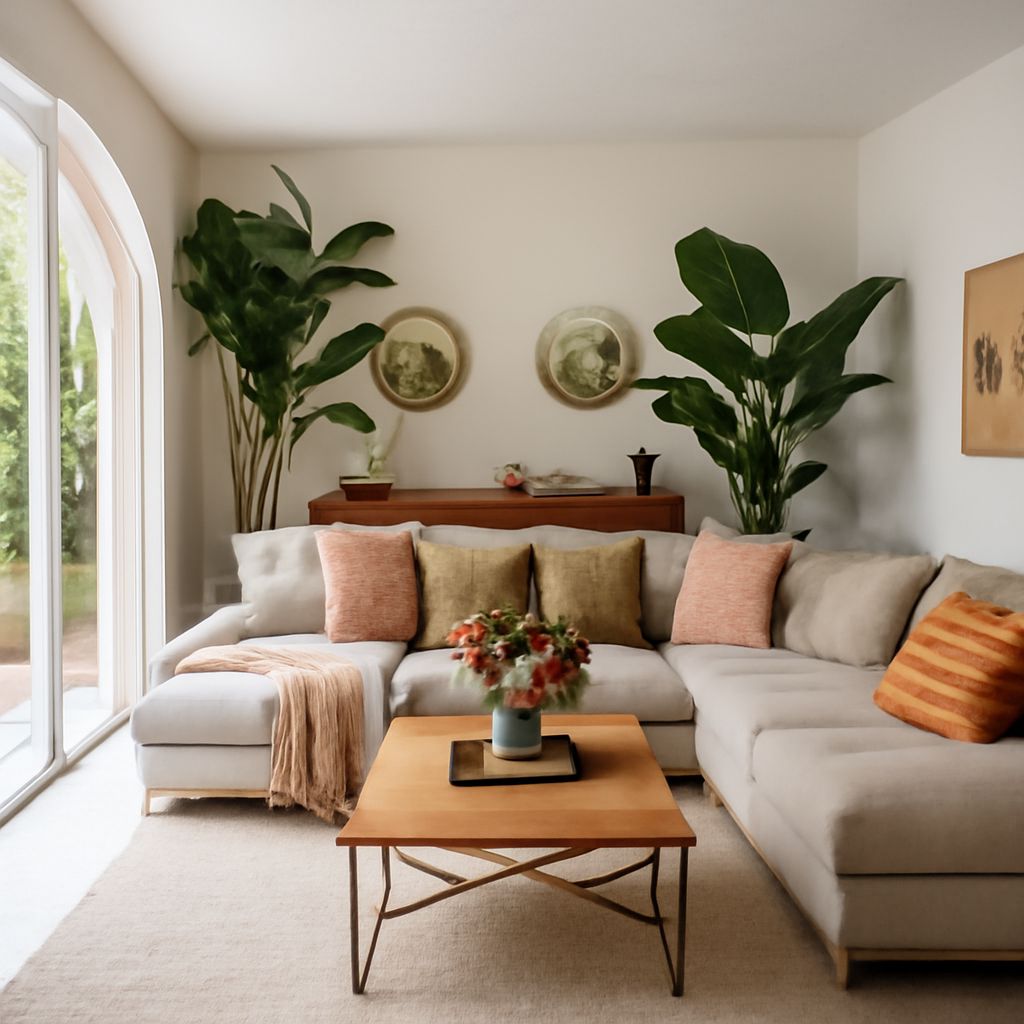
The right mix depends on how much visual activity a room can comfortably hold. A bright, generous living room may support a large patterned rug and several strong colors; a smaller or shaded space may need more plain surfaces between its patterns. In both cases, a bohemian interior feels coherent when its layers share a few deliberate connections.
Boho-inspired decor for a home can grow from objects already in use: a favorite textile, a wood table, or a collection of ceramics. Repeat a color or material from those pieces, arrange them around a practical seating plan, and let the room’s light guide the final choices.
Boho home decor begins with a useful foundation
Before adding patterns, decide how the room must work. Mark the routes between doors, the places where people sit, and the surfaces needed for drinks, books, or a laptop. A layered room is still easier to enjoy when a person can cross it without moving a basket or stepping around a lamp cord.
Consider a hypothetical living room with a cream sofa, medium-brown wood floor, one broad window, and a wall of books. The room is used for reading, conversation, and occasional work. Keep the sofa as a quiet base, place a low wood table within reach, and angle a comfortable chair toward both the window and the sofa. A rug large enough to connect the front legs of the seating pieces can give the group a clear boundary.
This foundation leaves room for boho interior design to develop through color and texture. A rust-colored cushion, a woven throw, and a handmade ceramic lamp add interest without requiring a new sofa. The existing books and a few personal objects make the room specific to its occupants.
Build a palette from one piece
Choose one item with two or three colors as the starting point. In the example, a rug with muted rust, indigo, and cream can guide the rest of the room. Repeat rust in a cushion, pick up indigo in a small framed print, and let the cream appear in the sofa and curtains. The colors do not have to match exactly; related tones create a connection while preserving variation.
Balance also depends on the amount of each color. A large cream sofa and pale wall can give the eye a place to rest while the rug carries more pattern. A dark table anchors the arrangement. If the room feels too pale, introduce a deeper color in a chair or artwork; if it feels crowded, remove a patterned cushion before changing the entire palette.
Daylight affects these decisions. View samples near the window and in the darkest corner, then under the lamps used in the evening. Rust may look lively in direct sun and browner after dark; a blue-gray can appear cooler in shade. Choose a sample that works beside the floor and upholstery in both conditions.
Mix pattern and texture at different scales
Combine a large motif with a smaller one so each remains legible. A broad geometric rug can sit beside a fine striped cushion and a solid woven throw. The stripe may repeat the rug’s blue, while the throw picks up its cream. Architectural Digest’s guide to mixing patterns describes using different pattern scales and a related palette to make combinations easier to read.
Texture adds variation even where colors are quiet. Pair smooth glazed pottery with a rougher woven basket, or a linen-like sofa with a soft wool throw. Wood, fabric, and ceramic reflect light differently; their contrast gives depth to a largely neutral scheme. Touch samples as well as looking at them, especially for pieces used every day.
In modern bohemian interior design, a single bold textile can carry the room while surrounding furniture remains simple. A cleaner-lined sofa gives a detailed rug space to stand out. For a more abundant look, add a second patterned chair or curtain, keeping one color in common. Both approaches can feel personal; the difference is how much pattern the occupants want to live with.
Give personal objects space to be seen
A bohemian style home gains character from objects with meaning to its occupants. A collection of pottery, a photograph, a handmade textile, or a chair found secondhand can all belong in the same room. Group a few related items on a shelf instead of distributing every object evenly across every surface. Differences in height and shape create a small composition, while an empty section of shelf lets the group stand apart.
Decor for a bohemian home becomes more personal when the story of an object guides its placement. A delicate textile may be better displayed away from strong direct sun; a much-used bowl belongs where it can be reached. If a piece comes from a particular maker or tradition, keep its attribution and care information. Meaning comes from a genuine relationship with the object, not from treating a collection of unrelated cultural references as a single motif.
For a more contemporary bohemian interior, choose one large artwork above the sofa and a few smaller objects nearby. The open wall around it gives the room a calm visual center. A denser gallery can work in the same place if its frames share a color or the arrangement has a clear outer shape. Lay the pieces on the floor first, photograph the grouping, and adjust the spacing before hanging them.
Adjust the layers for real life
Boho decorating should leave the practical parts of the room accessible. Keep a side table clear enough for a cup, provide covered storage for games, and leave space to open cabinet doors. Select washable cushion covers or easy-care textiles where children and pets spend time. A textured rug may feel comfortable underfoot, but check cleaning instructions and whether its pile suits a chair that needs to move across it.
Lighting can make the layers useful after sunset. A shaded floor lamp beside the reading chair provides focused light; a table lamp at the other end of the sofa creates a second pool of light. Test whether the shade produces glare from the seat and whether cords can be routed away from walking paths. A small accent light can highlight the bookshelf, but it should not be the only source for reading.
Boho home decor can change gradually. Live with the rug and one cushion before buying more accessories; the room may need another color, or it may need a clear surface. Adding slowly also makes it easier to select pieces that fit existing furniture and daily habits.
Stand at the entrance and photograph the room in daylight, then again with the evening lamps on. Check the paths, repeated colors, and balance of patterned and quiet areas; move or remove one object and compare the two views before adding the next layer.