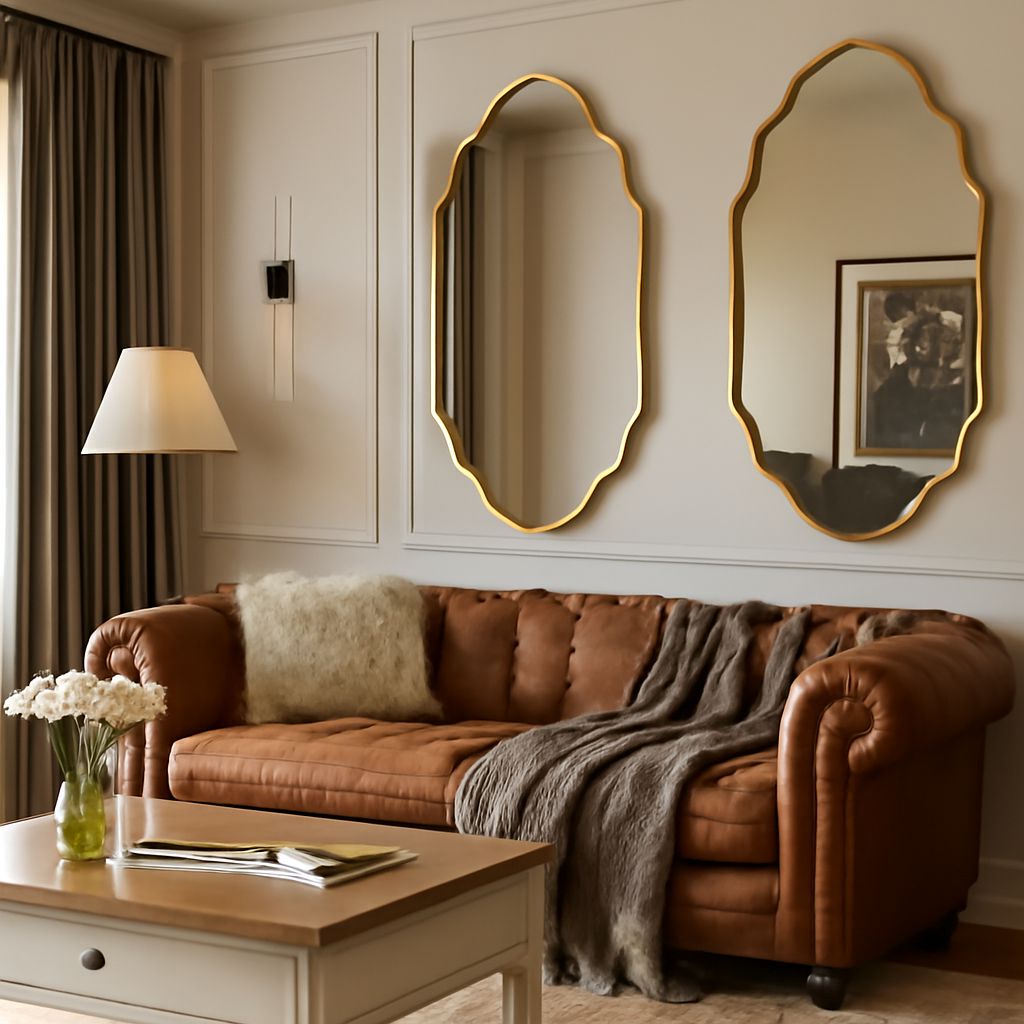
A mirror above a sofa may reflect a window, a ceiling fan or a blank television screen. Its position determines which of those views becomes part of the room. A living room wall mirror should be judged from the places where people sit as well as from the doorway.
Decorative living room mirrors can brighten a composition and give furniture a visual anchor, but their effect depends on what they reflect. Before choosing a frame, consider the available wall, the direction of daylight and the strength of the surface that will carry the weight.
Decorative Mirrors for the Living Room: Size and Shape
Measure the furniture and the wall around it. A 30-inch mirror above a 72-inch sofa will read as a compact accent; a 48-inch mirror will make a broader statement. Neither proportion is automatically correct. A smaller decorative mirror can work within a living room picture group, while a larger one can stand alone. Leave enough open wall around the frame for the arrangement to feel deliberate rather than squeezed between a lamp and a doorway.
For a wall mirror in the living area, cut a paper template to size and tape it up. Sit on the sofa and look at it from the entrance. Move it up, down and sideways until it relates comfortably to the furniture. If it will hang over a console, compare its width with the console top and leave room for objects placed there. A tall vase should not obscure the center of the reflection.
Wall mirrors for the living room can be horizontal, vertical or round. A horizontal rectangle reinforces the long line of a sofa or sideboard. A vertical rectangle can use the height beside a fireplace or between windows, provided there is enough clearance around the frame. A round mirror softens a setting dominated by rectangular furniture, although its reflected image occupies less of its bounding square than a rectangular mirror of the same width and height.
What the Mirror Will Show
Stand where the glass would be and look outward, then have a helper hold a small mirror there to check the reflected view from a chair. A piece opposite a window may bring greenery and daylight into view. Shift it to one side if the reflected sun falls directly into a seated person’s eyes. At night, check whether a lamp becomes a pleasant glow or a distracting bright spot.
A wall-mounted mirror in a living room can also frame a favorite painting, a plant or a doorway to an adjacent space. Avoid placing it where the most prominent reflection is a stack of cables or the underside of a ceiling fixture, unless those elements can be moved. Among wall decor, mirrors have the unusual advantage of changing their image as people move through the room; test several sightlines before deciding.
Compare a wall mirror in the sitting room above a mantel with one beside a window. Above a mantel, the frame becomes part of an existing focal point, but a high position may show mostly ceiling to someone seated. Beside a window, an angled view may pick up the room and some daylight without showing the window itself. A template marks the outline; the small hand mirror reveals the image within it.
Frame a Composition
Choose a living room decorative mirror frame by considering the other visible materials. A narrow black metal frame can give a pale wall definition and relate to black lamp bases. Warm wood can echo a console without matching it exactly. Brass introduces a warm highlight beside navy upholstery or dark wood; a simple painted frame can blend into a quieter, layered room.
Decorative mirrors for the living room need breathing space around their edges. On a busy gallery wall, place the mirrored wall decoration first and arrange art around it with consistent gaps. In a quieter room, let one substantial frame stand on its own. A heavily carved frame already has a strong silhouette, so surrounding it with equally ornate objects may make the wall feel crowded.
For an 80-inch console, a 42-inch round mirror centered above it leaves visible furniture on both sides. A pair of low lamps can balance the shape if their shades do not cover the reflection. Alternatively, a 54-inch horizontal mirror can make the console feel wider; a single low bowl may be enough beneath it. In both cases, confirm the view from the sofa rather than judging solely while standing in front of the wall.
Mount for the Actual Wall
Before buying hardware, find the mirror’s actual weight on its label or specifications, or weigh it with its frame and attached fittings. Identify the wall material and its condition: drywall over wood studs, plaster, brick and concrete require different fastening choices. Locate studs where applicable and check the intended drilling area for concealed wires or pipes. A mirror that suits the composition still needs a secure fixing at that location.
Follow the mirror maker’s hanging instructions and choose hardware rated for the load and the specific wall material. For example, this mirror installation guide requires its attached rings or keyhole hangers and says to choose anchors according to the wall and item weight. Another mirror may specify a different method; do not add wire or substitute a cleat unless its manufacturer permits it. Check anchor installation details, including hole size and spacing, on the selected product.
A stud can provide a secure fixing point when the manufacturer specifies compatible screws and placement. If the desired position falls between studs, use an anchor approved for the wall and load under the product’s instructions. Do not simply add the ratings of two fasteners: 3M states that the capacity of its two CLAW hangers is not cumulative. That rule is specific to the product, illustrating why the actual hardware instructions matter.
Heavy glass is awkward to lift and align. Have a helper support it, and use a professional installer when the wall construction, suitable anchors or safe handling is uncertain. Check that each hanger is fully engaged and the frame is level before releasing it. Decorative mirror choices for a living room should include this installation work in the plan, especially above a seat.
To choose between two positions, compare the view from the sofa first. Above the console, a 42-inch round frame may reflect a plant and leave balanced space on either side, but its intended fixing points must suit the wall. Beside the window, a narrower vertical frame may catch more daylight and fit the available strip; check for glare and a secure anchor location. Select the position that delivers the better reflection, fits its furniture and allows the specified hardware to be installed safely.