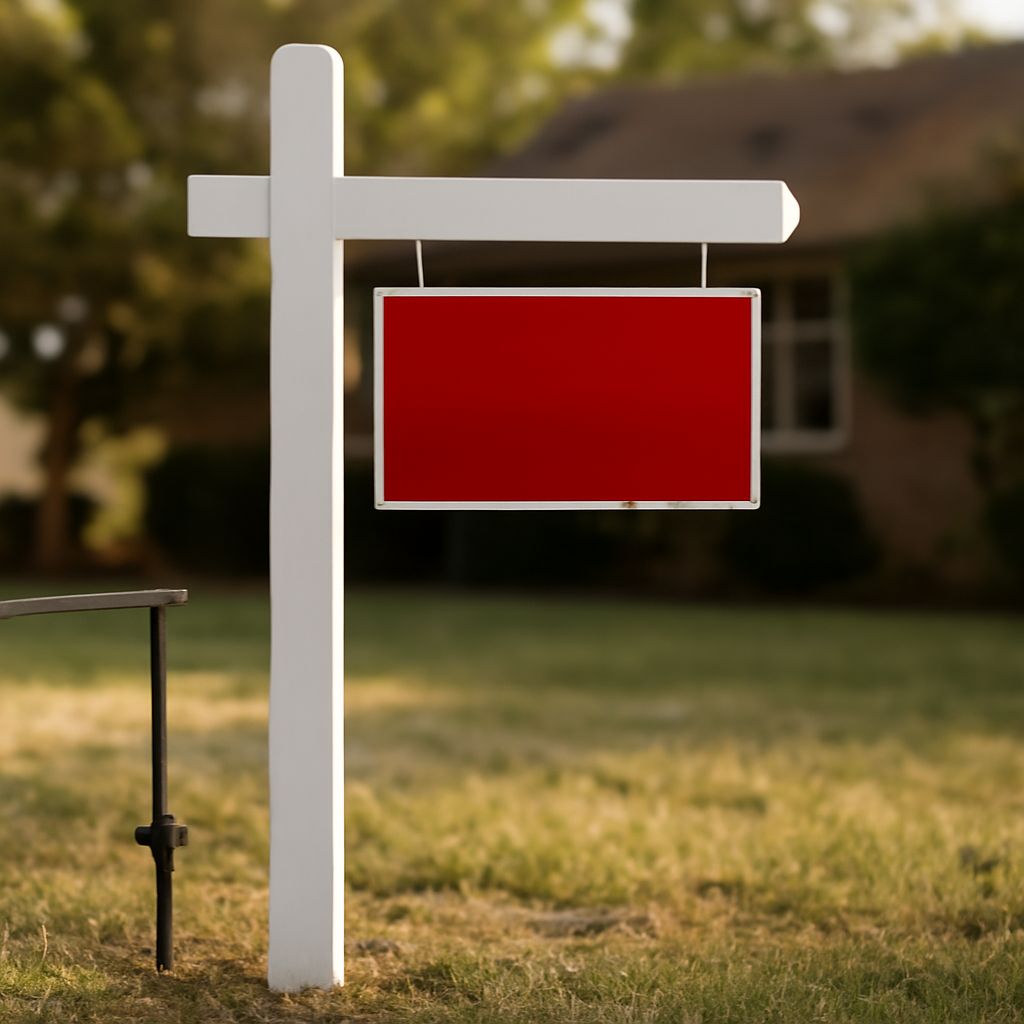
A sold sign real estate agents place in a front yard is one of the most efficient marketing tools in the business — and one of the most underutilized. Every neighbor who sees that sold real estate sign knows your name closed a deal on their street. The real estate sold sign creates social proof at the neighborhood level, prompting calls from owners who now believe their own home might sell quickly. But the sign’s marketing power depends on its physical quality and placement. Understanding the standard real estate sign size for your market, and choosing high-quality vinyl real estate sign posts that stay straight and visible through wind and rain, determines how professional that social proof signal looks over the weeks between contract and close.
Standard Real Estate Sign Size and Compliance
The standard real estate sign size for residential properties in most U.S. markets is 18×24 inches — a size that is readable from a moving vehicle at 20–30 mph without dominating the yard. Some municipalities require smaller signs, and HOAs often impose their own size restrictions; check local rules before ordering. Commercial properties often use 24×36 or larger formats. Always verify dimensions against your local zoning ordinance before installation, because an oversized sold sign real estate display can result in a fine that creates a far worse impression than no sign at all.
Corrugated plastic (coroplast) is the standard panel material for a sold real estate sign at the entry-level price point. It is lightweight, weather-resistant, and prints cleanly. Aluminum panels are more expensive but more durable — they do not dent from impacts, do not fade as quickly in UV exposure, and have a more premium look that some agents prefer for listings in higher price brackets.
Vinyl Real Estate Sign Posts: Types and Installation
Vinyl real estate sign posts are the most common post type because they combine weather resistance, reasonable cost, and a clean white appearance that does not compete visually with the sign panel. A standard two-post vinyl system uses 4-foot posts with step-in stakes. For hard or clay soils, use a post driver rather than foot pressure — forcing posts into resistant soil without a driver bends the stake and loosens the post within days. Premium vinyl real estate sign posts include wire bracing options that resist wind loading in open lots or corner properties where gusts exceed 20–25 mph.
Real Estate Sold Sign as a Prospecting Tool
The real estate sold sign strategy that top-listing agents use is consistent and intentional: keep the sign up for the full contingency period, not just until contract signing. A sold sign visible for 30–45 days reaches more neighbors on their morning commute, evening walk, and weekend errands than a sign taken down after two weeks. The extended visibility multiplies the number of impression opportunities from a single deal.
Pair your sold sign real estate presence with a door-hanger campaign to the 25 nearest homes immediately after going under contract. The message: “Your neighbor’s home just sold — find out what yours is worth.” This combination of physical sign presence and direct outreach converts neighborhood visibility into actual listing appointments at a rate that paid digital advertising cannot match at equivalent cost. The standard real estate sign size and quality you invest in directly affects how credible that message appears when the neighbor walks past on their way home.