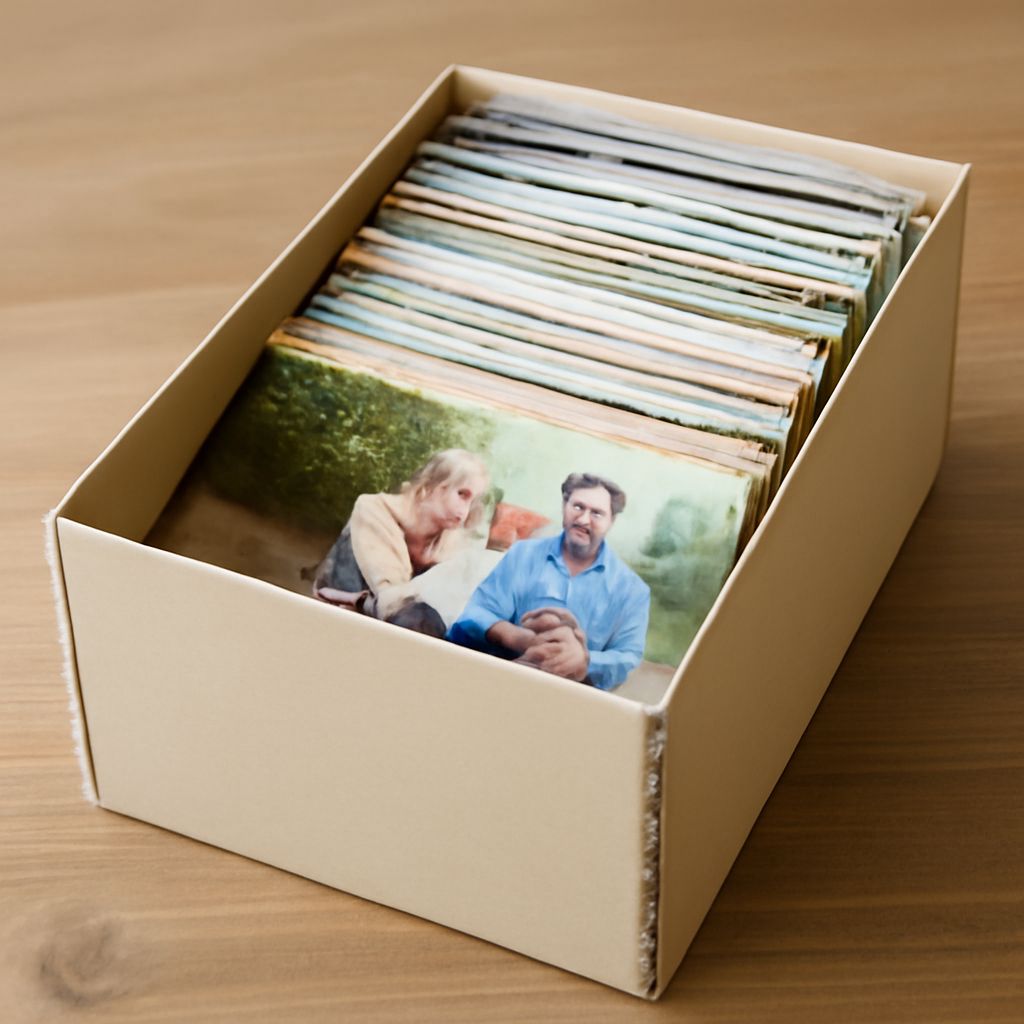
Forever Photo Storage: Best Archival Boxes and Acid-Free Solutions
Your photos survive the moments they capture — but only if you store them correctly. Forever photo storage is not a marketing phrase; it is a specific standard requiring materials that do not off-gas acids, do not trap moisture, and do not degrade paper over decades. Archival photo storage boxes built to Library of Congress or PAT (Photographic Activity Test) standards give you a measurable baseline. Acid free photo storage boxes eliminate the primary cause of yellowing and brittleness in prints. Finding the best photo storage boxes for your collection means matching box size to print size, material quality to storage environment, and capacity to your actual volume. Whether you are preserving a shoebox of family snapshots or a professional archive, the principles of archival photo storage are the same: control the chemistry, control the climate, control the access.
What Makes Archival Photo Storage Boxes Different
Archival photo storage boxes are made from buffered acid-free materials — typically a pH of 8.5 or higher — that neutralize acids migrating from prints over time. Standard cardboard boxes, even if marketed as photo-safe, often have a pH below 7 and will acidify your prints within five to ten years. The difference is measurable with a pH indicator pen in under 30 seconds.
True acid free photo storage boxes also use lignin-free board. Lignin is a natural polymer in wood pulp that breaks down into acidic compounds over time. Removing it extends the box life dramatically. Look for the PAT certification on the box label — it means the product has been independently tested for photographic compatibility and will not chemically interact with your prints.
Sizing and Capacity for Your Collection
Match box dimensions to your most common print size. A 4×6 print in a 5×7 box shifts and bends at the corners. Standard sizes for forever photo storage boxes include 4×6, 5×7, 8×10, and panoramic formats. For mixed collections, purchase the next size up and use acid-free dividers or envelopes to separate prints within each box.
Best Photo Storage Boxes: What to Look For
The best photo storage boxes combine archival-grade board with a drop-front or clamshell design that minimizes handling damage when you access prints. Drop-front boxes allow you to slide prints in and out without lifting and bending the top stack — a small design detail that prevents significant wear over years of retrieval.
For archival photo storage at scale, manufacturers like Gaylord Archival, Hollinger Metal Edge, and Lineco produce boxes used by museums and universities. For home use at lower cost, acid-free options are available that meet basic archival standards — verify pH and lignin-free status on the product data sheet, not just the marketing copy.
Store your acid free photo storage boxes at 65–70°F and 30–40% relative humidity. Basements and attics are the two worst locations in any home — temperature swings and moisture cycles are the primary accelerants of print deterioration. A climate-controlled closet or an interior room shelf is better than any specialized box kept in an uncontrolled environment. Good forever photo storage is more about location than about any single product you buy.